Donor Communications Playbook: How to Secure Lasting Support
September 23, 2024Imagine this: Your nonprofit has set its sights on a new program or program expansion. Your team has already identified the emerging need in your community, calculated your program’s estimated costs, and projected the impact it will have on those you serve. But before you can turn your aspirations into a reality, you need to get your donors on board. How? By having a clear, targeted donor communications plan.
In this guide, we’ll discuss how your nonprofit can nurture a loyal community of support through consistent and transparent donor communications. Here’s what we’ll cover:
- What Are Donor Communications?
- Top Donor Communications Methods
- 4 Elements of a Donor Communication Plan
- Tips for How to Communicate with Donors
According to a study conducted by Independent Sector, nonprofits are considered the most trusted institutions in America compared to government agencies, businesses, and media outlets. This trust, however, must be earned and reinforced—starting with communication.

What Are Donor Communications?
Donor communications are actions your nonprofit carries out to engage, educate, and secure support from donors—including prospects, current donors, and lapsed donors.
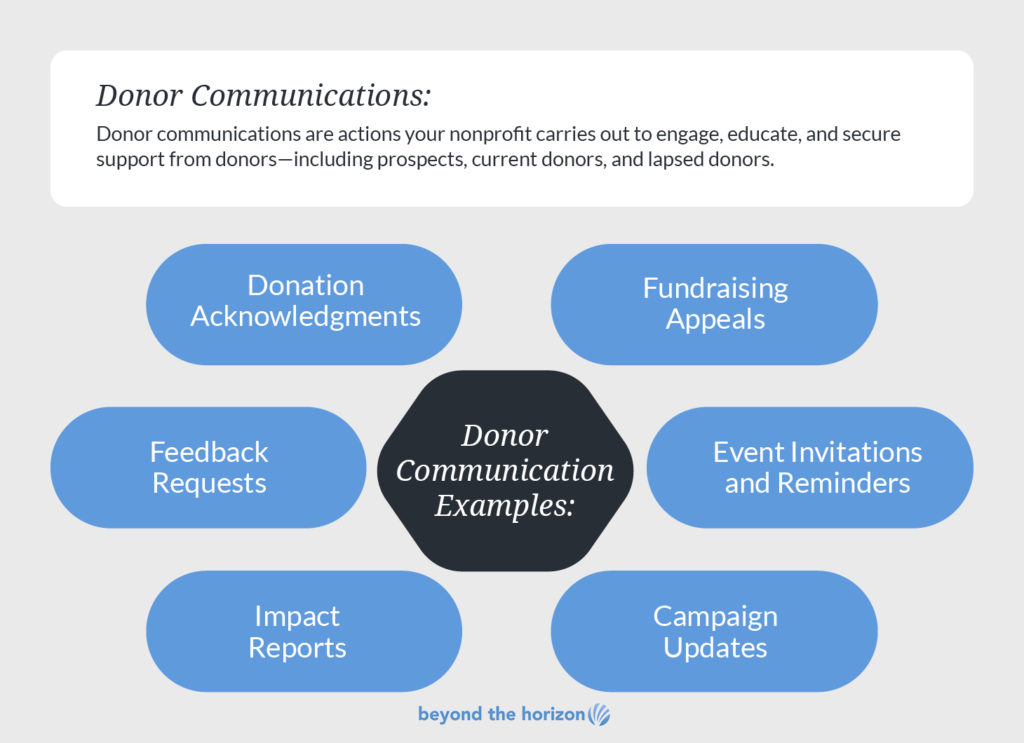
Some common examples of donor communications are:
- Fundraising appeals
- Event invitations and reminders
- Campaign updates
- Impact reports
- Feedback requests
- Donation acknowledgments
Your nonprofit’s messages should be frequent and prompt to keep donors invested and informed about your mission priorities. As a basic step, 70% of nonprofits send automatic donation receipts via email.
However, when reaching out to donors, it’s important to remember that you’re communicating with individual contributors to your mission rather than some generic donor base. The more each donor feels personally valued by your nonprofit, the more likely they will stay involved in the long run.
Why Do Donor Communications Matter?
Donors are the backbone of your organization, providing you with the funds to pursue your mission every day. One of the key ingredients of successful nonprofit-donor relationships is communication, which allows you to:
- Boost donor engagement. Your donors lead busy lives, and sometimes, they can get so preoccupied with their own priorities that they forget to keep up with what’s happening at your nonprofit. By reaching out to donors regularly, you can share updates, invite them to support your latest projects, and ensure that your organization stays at the top of their minds.
- Enhance transparency. When donors contribute their hard-earned funds to your mission, they want to know you’re putting their dollars to good use. Donation follow-ups and annual impact reports establish a direct link between their generosity and your impact, reassuring them that they’ve made the right choice in supporting your nonprofit and increasing the chances that they’ll continue to do so.
- Acquire new donors. By actively communicating your updates, accomplishments, and funding needs, your nonprofit can spread the word about its cause and catch the attention of potential donors. When they see how your organization thoughtfully engages with its donors online, they’ll be much more interested in joining your committed and tight-knit community.
- Collect insightful feedback. Rather than just speaking at donors, a successful donor communication strategy involves listening to them, too. Giving donors the chance to share their feedback and experiences with your nonprofit allows you to unlock insights for improving your results going forward.
You know that you can’t fulfill your nonprofit’s mission alone. By improving your communications with donors, you can ensure you never have to.
Top Donor Communications Methods
Your nonprofit has many options for communicating with donors. The methods you choose will ultimately depend on the purpose of your messages and your audience’s preferences.
Here are the most common ways nonprofits connect with their donors:
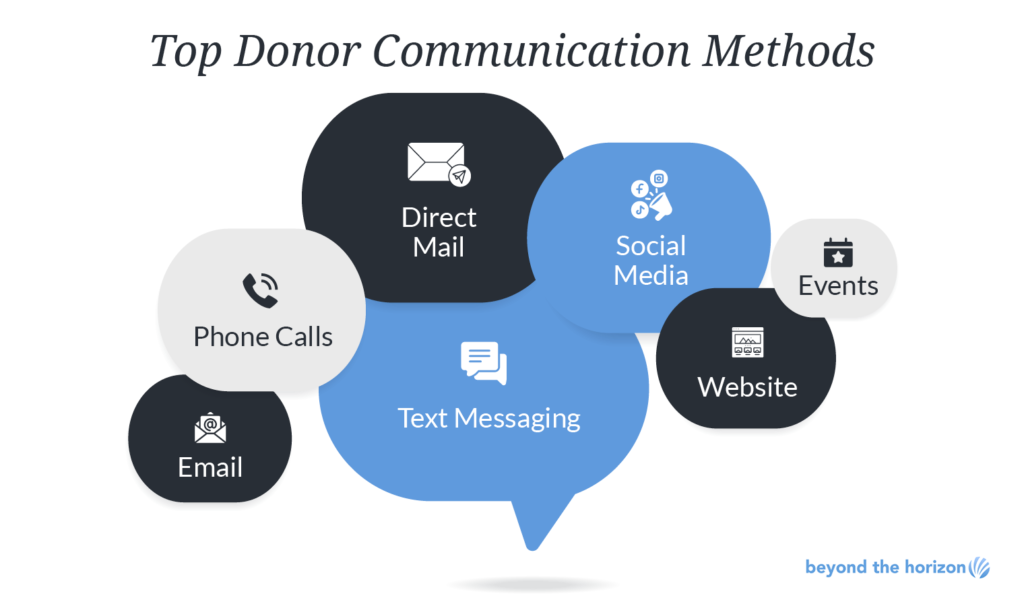
- Email. Many nonprofits have a weekly or monthly email newsletter that donors can subscribe to for updates. You can send emails to thank donors, invite them to an upcoming event, share volunteer opportunities, and more. Just be sure to use short, direct subject lines that spark a sense of urgency and include a clear call to action (CTA) in every email so donors understand what you expect from them.
- Website. Your website should contain all the important information donors need to know about your nonprofit. Post blog articles about your impact, broadcast event details, and feature testimonials from key donors and beneficiaries. Make sure your website content is mobile-responsive so people can access it on whatever device they’re using.
- Social Media. By establishing a strong social media presence, your nonprofit can build an active online community around your mission. In an average week, nonprofits post 5.95 times on Facebook, 4.9 times on Instagram, 6.97 times on X (formerly Twitter), and 1.59 times on TikTok. These platforms are ideal for sharing short reminders or updates and engaging donors in real time through live-streamed events.
- Direct Mail. Sending printed letters and handwritten cards can leave a lasting impression on your donors, especially if you’re trying to cultivate major gifts for your nonprofit. Consider using direct mail for exclusive event invitations, holiday greetings, and personalized thank-you letters.
- Text Messaging. 54% of nonprofit emails are read on mobile. Reach donors where they are by creating a text contact list. You can use text messages to send short campaign updates, donation reminders, and polls that encourage two-way communication with donors.
- Phone Calls. By calling key members of your donor base, you can demonstrate that your nonprofit values them as individuals and bring them closer to your mission. Make phone calls to learn more about each donor’s connection to your cause, encourage them to donate, and follow up about the impact of their contributions.
- Events. Hosting events allows your nonprofit’s team to interact face-to-face with donors. Plus, these events allow donors to get to know like-minded individuals who are passionate about the same cause, strengthening a sense of community around your organization.
Your nonprofit should implement a combination of these communication methods to maximize its reach. Then, based on donors' responses, identify the most promising ones to prioritize moving forward.
4 Elements of a Donor Communication Plan
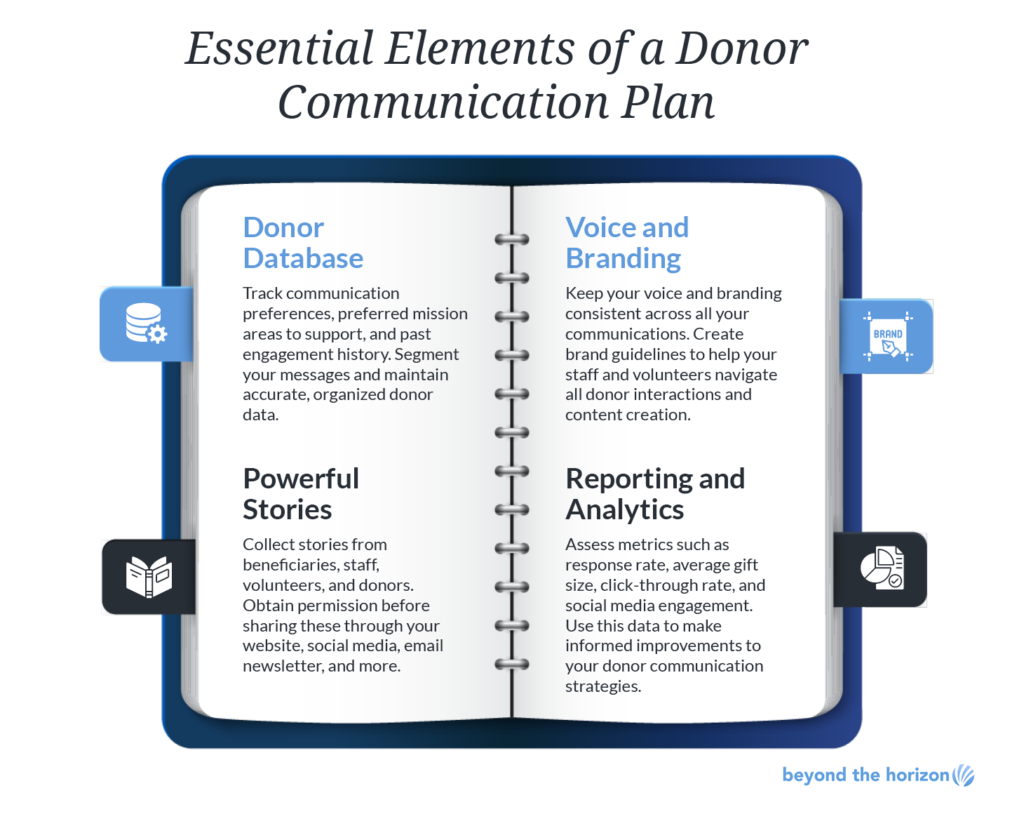
A donor communication plan serves as a roadmap that guides your nonprofit’s interactions with donors, ensuring you communicate consistently, transparently, and authentically. When developing your plan, build it around these four essential elements:
Donor Database
Your donors shouldn’t feel like strangers to your nonprofit. With a comprehensive donor database like Salesforce, you can store important information about each donor and use it to tailor your communications to them. To make the most of your donor database, keep the following best practices in mind:
- Collect relevant donor data. Track details such as each donor’s communication preferences, which areas of your mission they prefer to support, and their past engagement history. Note whether they’ve attended your past events, volunteered their time, or participated in a peer-to-peer fundraising campaign.
- Segment your communications. Group your donors based on shared characteristics to send communications that are more likely to resonate with their interests and preferences. For example, you might send a welcome email series to everyone in your new donor segment to introduce them to your nonprofit’s work and encourage them to explore all the ways they can get involved.
- Maintain data hygiene. Your nonprofit’s data can provide valuable insights for improving your donor communications, as long as you keep it organized and up-to-date. Standardize data entry (such as using abbreviations like Rd. and St. in addresses) and set user permissions to ensure only those who need to make changes in your database can do so.
If your organization is looking to adopt a new database or improve its data management processes, consider partnering with technology experts who specialize in working with nonprofits. These professionals understand your unique mission priorities and know how to tailor your technology toolkit to your needs.
Powerful Stories
Since the dawn of humanity, people have been telling stories to understand and bond with others. While facts and figures can go a long way toward illustrating your nonprofit’s important work and impact, stories allow donors to put themselves in the shoes of your beneficiaries, staff members, volunteers, and other donors.
Consider collecting stories about beneficiaries who overcame challenges with your nonprofit’s support, donors who have a personal connection to your cause, and long-time volunteers who are passionate about your everyday impact. Then, share these in:
- Social media posts.
- Email newsletter updates.
- Annual reports.
- Video testimonials.
- Podcast episodes.
- Blog articles or website case studies.
Remember to obtain written permission before you share anyone’s name, story, and image with your audience. Some people may want to be anonymous, even if you’re trying to recognize them for all they’ve contributed to your nonprofit. By respecting individual privacy preferences, your nonprofit can instill more trust within its community.
Voice and Branding
Your donor communications should do more than just catch attention. Every message you send should strengthen your relationship with the recipient and reinforce their interest in your mission. One of the most basic steps you can take to accomplish this is maintaining a consistent voice and branding.
According to the Nonprofit Communications Trends Report, 83% of nonprofits embody one of these four brand archetypes:
- The Caregiver: Compassionate, relatable, selfless
- The Sage: Wise, insightful, informative
- The Hero: Courageous, bold, motivational
- The Everyperson: Friendly, relatable, down-to-earth
No matter which archetype your nonprofit falls under, embracing only one ensures all of your communications come across as genuine to your audience. By incorporating your logo, colors, and key messaging across your content, you can boost your brand awareness and recognition. Create a brand guidelines document to keep your staff and volunteers on the same page.
Reporting and Analytics
Donor needs and preferences change. Therefore, so should your donor communication strategies. Continually assess your performance by setting key performance indicators (KPIs) related to your outreach. For example, you might track and analyze data such as:
- Donor response rate
- Donor retention rate
- Average gift size
- Email click-through rates
- Social media likes and comments
- Newsletter subscription rate
Based on your results, identify ways to improve your marketing materials, fundraising appeals, and impact reports. Muscular Dystrophy Association (MDA), for example, used email opens and clicks to measure engagement and build a legitimate reputation for its new email domain. The nonprofit incorporated personalization into every email campaign and went with a single sender for each audience to maximize its brand recognition.
Tips for How to Communicate with Donors
As you continue communicating with new and long-time donors, use the following tips to build authentic relationships and inspire action:
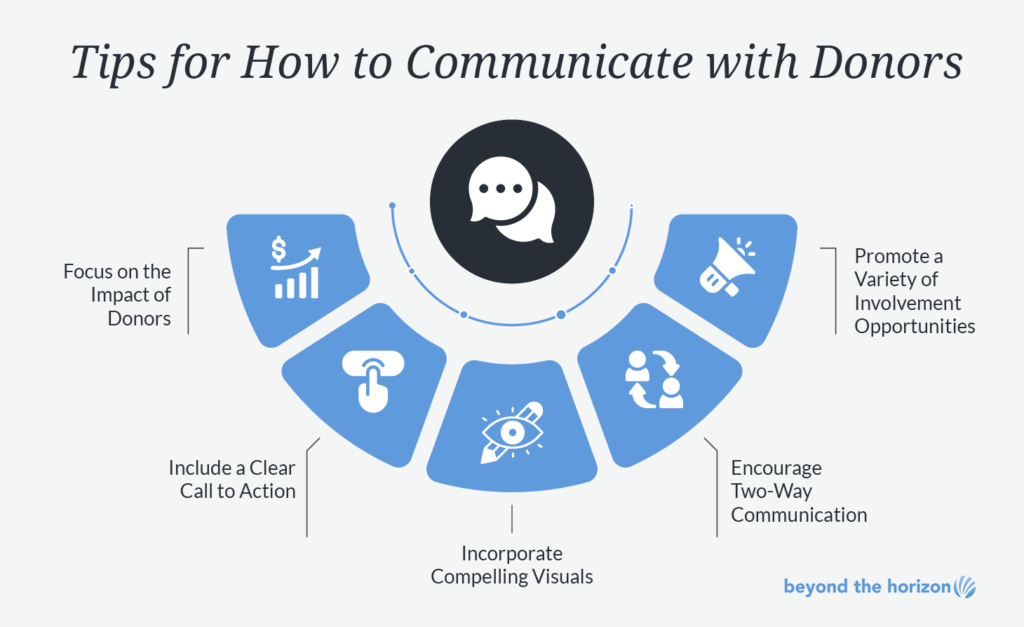
- Promote a variety of involvement opportunities. Even if your messaging makes donors feel compelled to get involved, they might not always be able to donate to your mission. In your donor communications, be sure to point them toward various options for supporting your cause, whether that’s volunteering, signing a petition, or participating in a peer-to-peer fundraising campaign.
- Encourage two-way communication. Strong donor relationships are not one-sided. Create a culture of collaboration around your nonprofit by giving donors opportunities to reach out to your organization and provide their input. Consider sending them surveys, responding to their social media comments, and hosting live Q&A sessions to pave the way for more interactive experiences with your nonprofit.
- Incorporate compelling visuals. Nonprofit posts with images have a 650% higher engagement rate. Add real images of beneficiaries, staff, and volunteers in your marketing content and donation page to help donors put a face to your cause. Create charts and infographics that make it easy for your audience to visualize the issue you’re trying to solve in the community and your impact.
- Include a clear CTA. Go beyond passive engagement by providing an obvious next step for donors in each of your messages. Whether you want them to donate, register for an event, or sign up to join your email newsletter, add an eye-catching button or link that directly takes them to where they need to go. In physical communications, like direct mail, consider using a QR code.
- Focus on donors’ impact. 80% of U.S. donors indicate that they need to see proof of an organization’s impact to continue supporting it. To keep your donors invested, follow up regularly and share everything you’re able to accomplish thanks to their donations. Use donor-centric language, such as “with your help” and “because of your generosity,” to make them feel like important contributors to your mission.
Recognition should play a central role in your donor communications. From thank-you emails to appreciation videos, there are many ways your nonprofit can make donors feel valued and reinforce their commitment to your cause. By celebrating your victories together, you can nurture impactful relationships that will power your mission for years to come.
Wrapping Up: Inspiring Generosity Through Donor Communications
Your nonprofit’s donor communications don’t have to be a guessing game. With a dedicated, data-driven plan, you’ll be well on your way to building a loyal donor base you can count on.
At Beyond the Horizon, we’re committed to helping nonprofits like yours harness the full potential of their technology to carry out their mission-critical activities. With our in-depth nonprofit experience and technological expertise, we’ll set you up with a system tailored to your specific needs so you can work smarter, not harder. Contact us today to learn how we can support your goals!
If you’d like more tips on becoming a modern, tech-forward nonprofit, explore these additional resources:
- The Importance of Data for Nonprofits: A Complete Guide. Learn how your nonprofit can benefit from, collect, and use data to improve its strategies in this comprehensive guide.
- Salesforce Change Management: A Guide + 5 Steps for Success. If your nonprofit plans to implement Salesforce or improve its existing system, follow these steps for a smooth transition.
- Elevate Your Nonprofit with a Strategic Partner. Discover the advantages of working with a nonprofit technology partner and how to find the right fit for your needs.